
Before You Light the Fire: What You Need to Know About Chimney Safety
/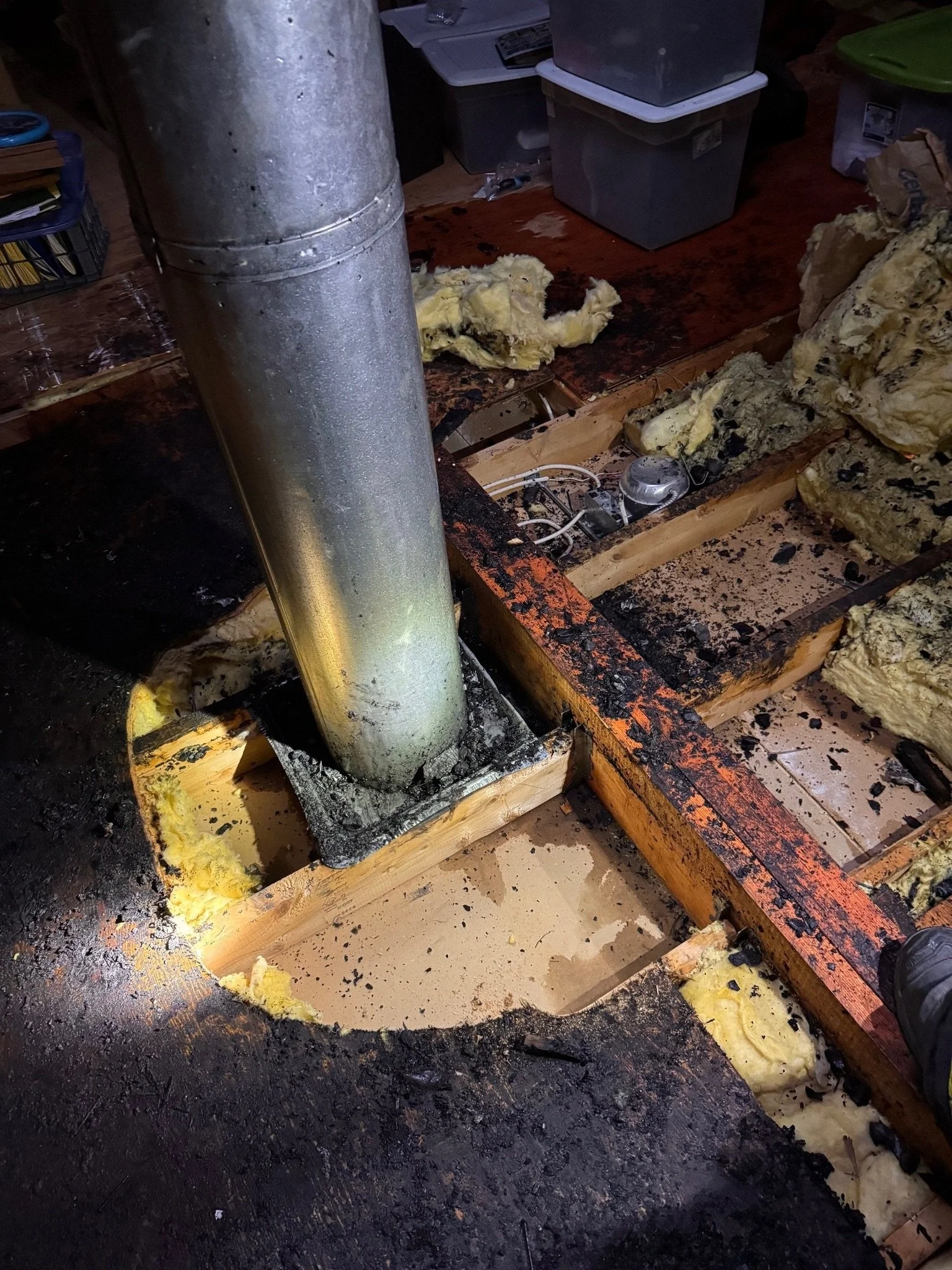
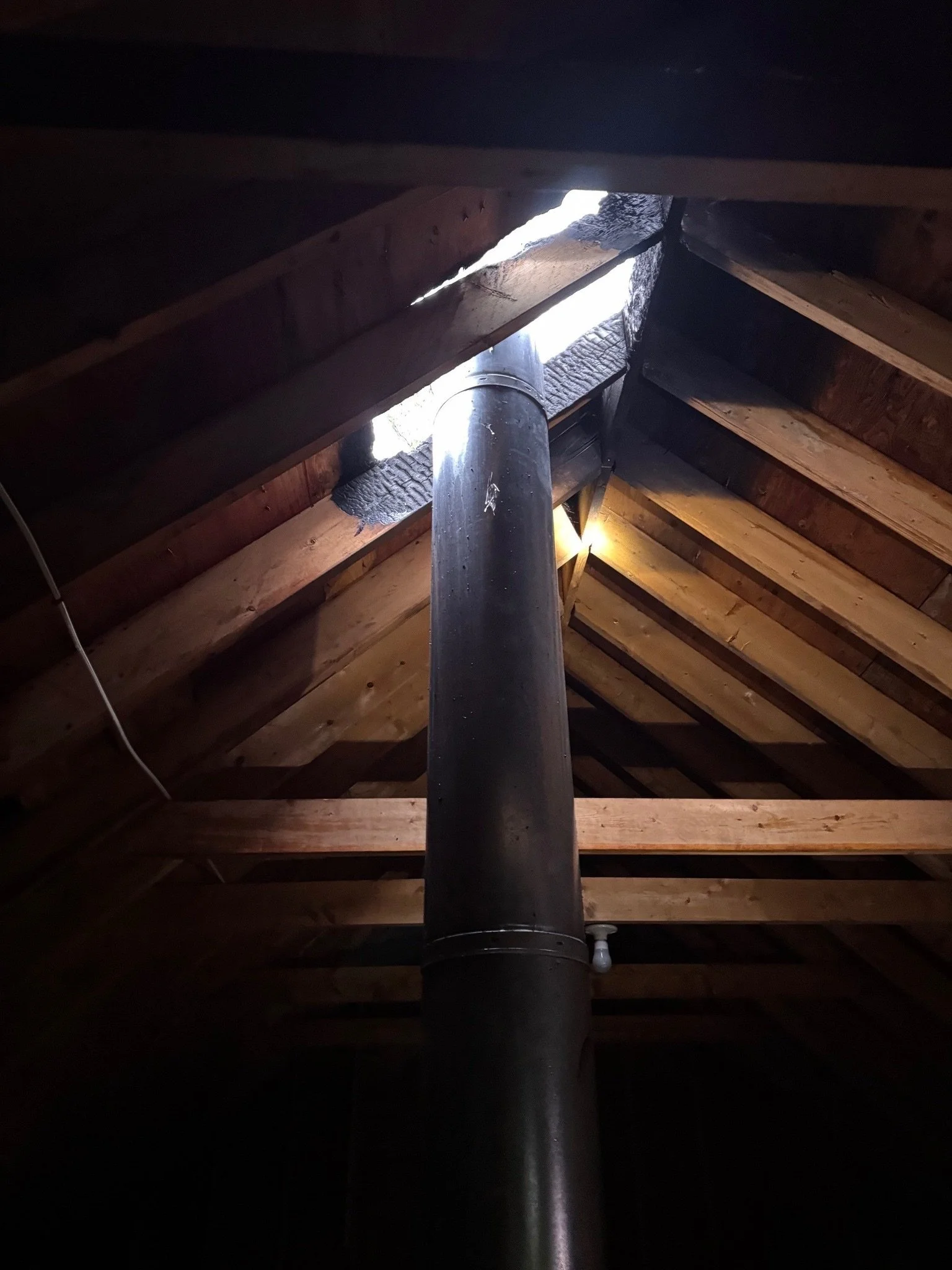
Last October, just as the weather turned from hot to cool and crisp, the Monterey Fire Department responded to a reported chimney fire. Upon arrival, crews found that the fire had spread from the chimney to the roof. Firefighters quickly contained the flames and used thermal imaging to check for hidden heat sources, ensuring there was no further risk of reignition.
What remained was a damaged roof, including charred rafters, and a pair of homeowners left deeply shaken by the experience.
This is just another way of saying, “Yes, chimney fire season has begun.”
“There’s not a year that goes by that we don’t have chimney fires,” said Fire Chief Shawn Tryon. “The thing we want people to know is these fires are not only dangerous, but often preventable.”
What Causes Chimney Fires?
Chimney fires often start when creosote, a flammable, tar-like substance, builds up inside the chimney flue. Creosote forms from the condensed byproducts of incomplete combustion. As smoke and vapor rise through the chimney, they encounter cooler chimney walls, especially in exterior or poorly insulated chimneys. These cooler surfaces cause the hot gases to cool rapidly, leading to the condensation of moisture, unburned wood particles and volatile organic compounds — ingredients that form creosote. Over time, this residue can thicken and accumulate into a hardened, combustible layer. If ignited, creosote can burn at temperatures over 2,000°F, potentially causing severe damage to the chimney and surrounding structure.
“Chimney fires can sound like a low rumble, a freight train or loud crackling,” said Chief Tryon. “But the most dangerous fires can be the quiet ones, the slow-burning kind that go undetected until serious damage is already done.”
How to Prevent a Chimney Fire
Here are a few key steps every wood-burning household should take:
• Burn only DRY, seasoned wood. Wet or green wood creates more smoke and more creosote.
• Have your chimney inspected and cleaned annually by a certified chimney sweep.
• Use proper airflow techniques. A hot, fast-burning fire produces less creosote than a smoldering one.
• Install a chimney cap to keep out rain, debris and animals, all of which can create blockages or fire hazards.
Keep in mind that it’s better to build a small, hot fire than to try to control a large fire that burns cooler. A cooler, smoldering fire leads to incomplete combustion, which produces more creosote.
Two More Fire Safety Reminders
Before you settle in for a warm evening by the fire, keep these two often-overlooked safety tips in mind that can prevent major emergencies.
1. Check Smoke and Carbon Monoxide Alarms: Let daylight saving time serve as your twice-a-year reminder to test all smoke alarms. Ensure there’s one on every level of your home, including near sleeping areas. Install carbon monoxide detectors, too, particularly if you burn wood. Chimney blockages can silently release deadly gas into your home.
2. Safely Dispose of Fireplace or Wood Stove Ash: Ash might look harmless, but it can hide embers that stay hot for days.
“Every year, we respond to fires that start from improper ash disposal,” said Chief Tryon. “Treat all ash as if it’s still burning.”
How to dispose of fireplace ash safely? Let ashes cool completely. Use a metal shovel to transfer ashes to a metal container with a tight-fitting lid. Never use cardboard, paper bags or plastic containers. Store the container outside, on a fireproof surface like concrete, away from your home, garage or anything flammable. Check for residual heat by feeling the outside of the container before final disposal. Once completely cold, you can compost the ash or use it in your garden (wood ash can benefit acidic soils in small amounts).