
She Never Chose Between Science and Firefighting
/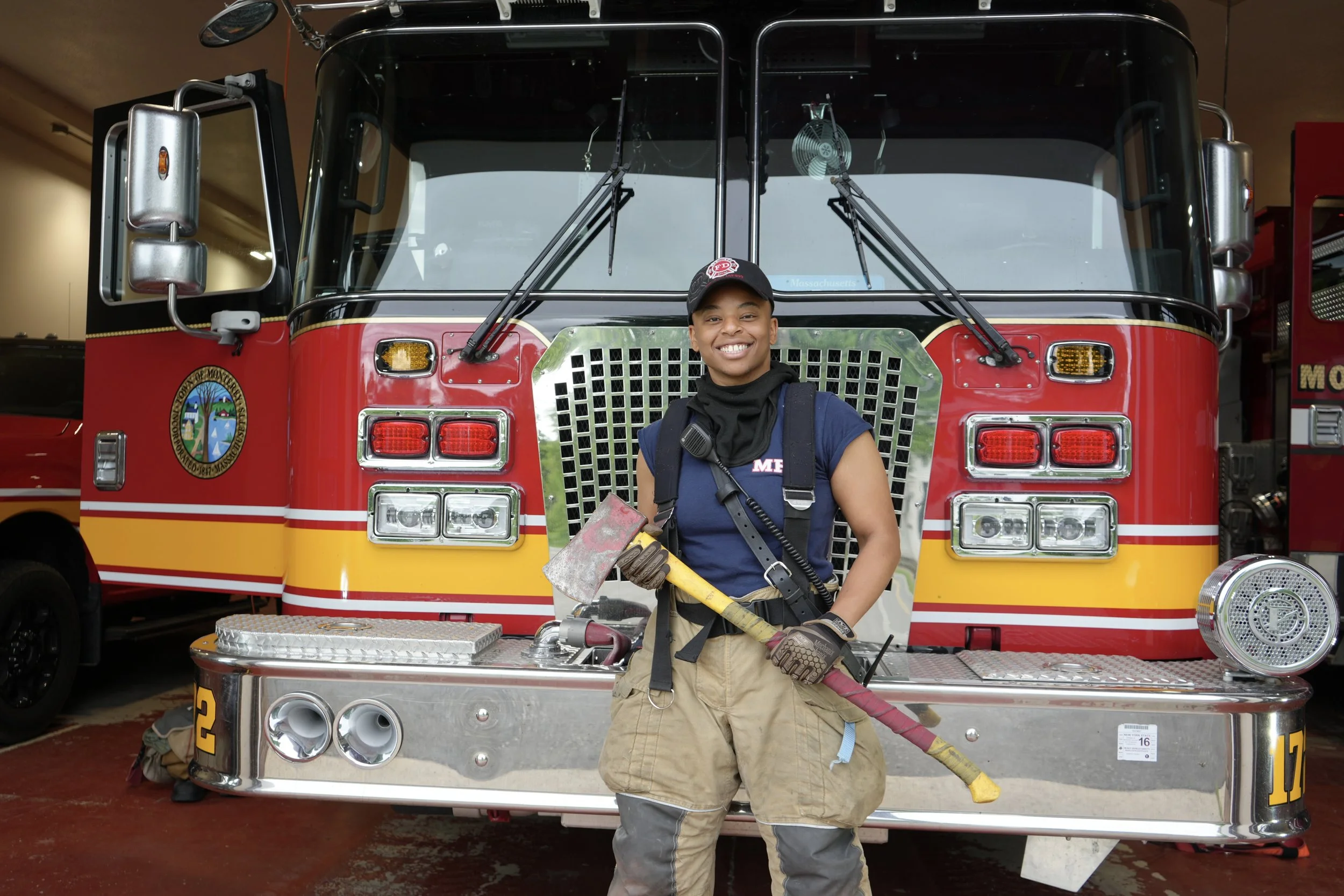
Lisa Wren at the Monterey Fire Station, where she works per diem shifts.
At five years old, Lisa Wren would pull on her grandmother’s oversized snow boots, slip into a plastic firefighter costume and spend afternoons in the backyard spraying a garden hose at cardboard boxes she imagined were burning houses.
Around the same time, she became fascinated by “The Magic School Bus.” While other children had favorite cartoons, Wren couldn’t get enough of the episodes that traveled through the human body.
Thirty years later, she still hasn’t outgrown either obsession.
Now 35, Wren divides her life between cardiovascular research and the fire service, including working per diem shifts for the Monterey Fire Department. Some days she’s studying new therapies for heart failure. Others she’s climbing onto a fire engine or responding to medical emergencies.
“I loved science, and I loved firefighting,” Wren said with a laugh. “Even as a kid.”
Growing up in St. Louis as the oldest of four children, Wren was raised in a family of teachers where curiosity was encouraged.
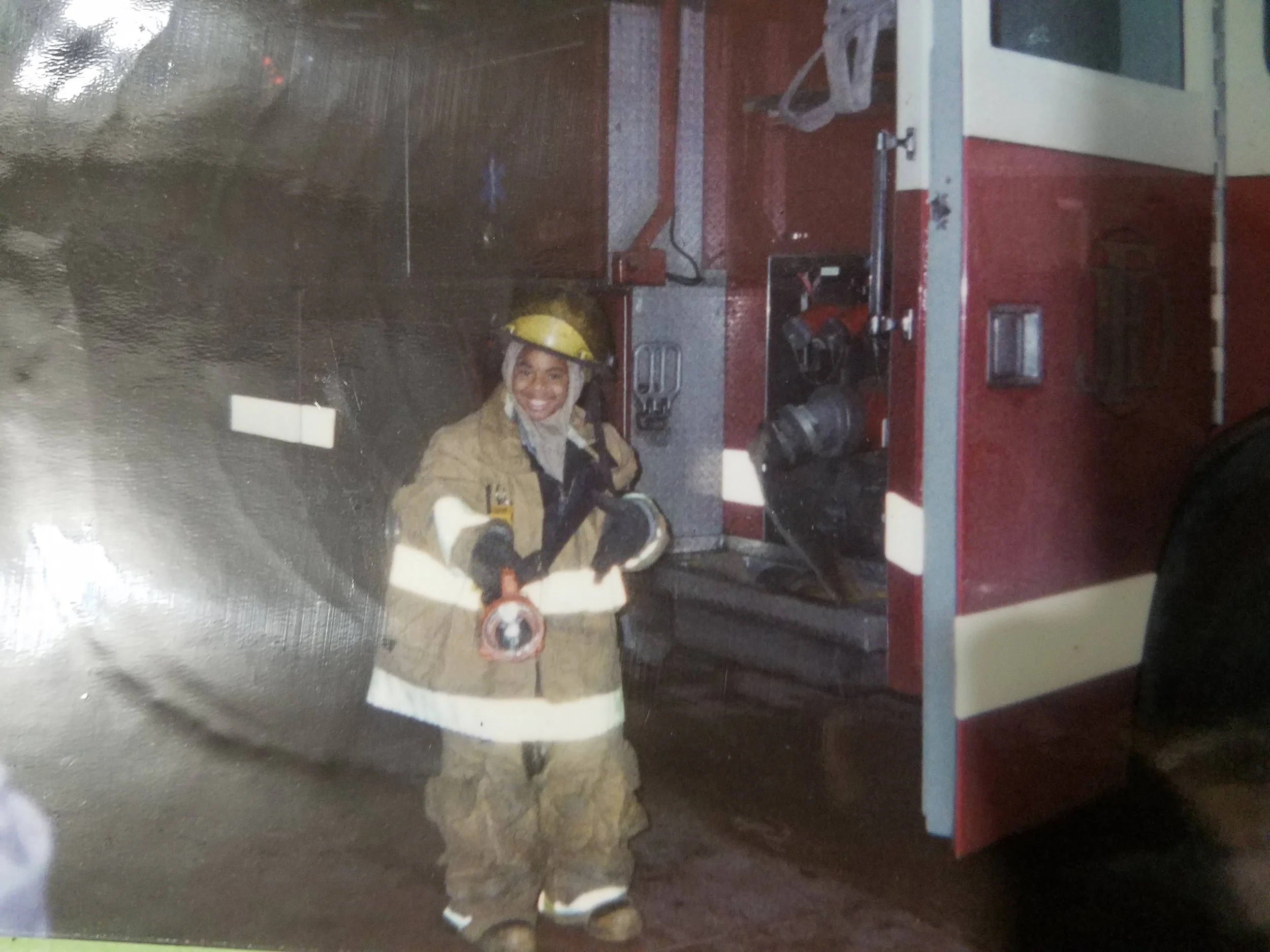
Lisa Wren as a child visiting a fire station. Then, being a firefighter was just a dream.
“My mom introduced me to ‘The Magic School Bus,’” she said. “I watched those episodes over and over.”
Her favorite episodes were always the ones exploring the human body. She loaded her high school schedule with science and health classes, and one assignment on the cardiovascular system changed everything.
“That’s when I decided I wanted to be a cardiologist.”
Sports filled the rest of her childhood. Wren began playing soccer, eventually earning a Division I scholarship to Jackson State University after being recruited at a showcase tournament in Dallas. She studied chemistry with a pre-med concentration, fully expecting medical school to be next.
Then summer research at Washington University in St. Louis changed her plans.
Working in cardiovascular research gave Wren opportunities not only in the laboratory but also alongside physicians and surgeons. She watched open-heart operations and found herself thinking back to the television show she’d loved as a child.
“I remember thinking, this is like ‘The Magic School Bus,’” she said. “People are going inside people and doing magic.”
The experience also showed her something unexpected.
“I realized I didn’t have to be the physician to make an impact on patients,” she said. “I really enjoyed the research.”
She continued studying cardiovascular genetics as a post-baccalaureate scholar at the University of Chicago Medical Center before earning a Ph.D. in Biomedical Sciences and a master’s degree in Clinical Investigation from Northwestern University.
By then, she’d built an impressive scientific career.
But one childhood dream refused to disappear.
For years, firefighting had been something she admired from a distance.
She collected toy fire trucks, watched firefighter videos on repeat, attended parades and convinced her grandmother to take her to local fire stations. One childhood photograph still shows her, seven years old, proudly dressed in turnout gear during a station visit.
“I just loved it,” she said.
The dream remained just that until a conversation during graduate school. While talking with a mentor, Wren casually mentioned that becoming a firefighter had always been something she’d wanted to do.
Her mentor asked a simple question.
“What if you believed that you could become one?”
The question stopped her.
“It never occurred to me that I didn’t believe I actually could,” Wren said. “It was always just a dream.”
That night she began researching firefighter training.
She enrolled in the fire science program at Malcolm X College in Chicago, taking classes at night while completing graduate school during the day. She earned her EMT certification, passed the national exam and started working on an ambulance. Soon afterward she attended a nights-and-weekends fire academy in Cook County before joining the Robins Fire Department in Illinois.
Her firefighter certification arrived on March 11, 2020, the same day much of the country began shutting down because of COVID-19.
“It was literally the day the world shut down,” she said.
As the pandemic unfolded, Wren balanced graduate school, heart research, firefighting, ambulance work and emergency medical coverage at professional sporting events.
Eventually, another opportunity brought her east.
In 2022, Wren moved to Connecticut after her partner accepted a position at the University of Connecticut. She joined the South Windsor Fire Department as a volunteer firefighter while continuing cardiovascular genetics research focused on new therapies for heart failure. Later she worked for American Medical Response before accepting her current per-diem firefighter position in Monterey.
Approaching her first anniversary with the department, she says she immediately felt welcomed.
“It feels like a family,” she said. “People genuinely care about each other and about serving the community.”
The move also introduced her to an entirely different style of firefighting. Most of her experience had been in cities with hydrants nearby and mutual aid only minutes away. Rural departments require different thinking: tanker operations, brush fires, longer response times, and solving problems when help may still be miles out.
“I’m always interested in learning something new,” she said.
One call from her time in Illinois continues to shape both of her careers.
Wren responded with her crew to an elderly man who was unresponsive. Despite extensive resuscitation efforts, he died.
Later that same day, firefighters were dispatched back to the same address. This time, it was for the man’s wife.
As Wren approached the home, a woman she saw standing in the yard looking extremely distraught walked up to her.
“She said, ‘I lost my daddy today, and I don’t know what to do,’” Wren recalled.
The woman was the elderly man’s daughter.
The moment stayed with Wren long after the shift ended.
“It shifted the way I think about the research I do,” she said. “The reason we’re looking for therapies is to help keep families together. To give people more time.”
The connection between her two careers became impossible to ignore.
In the laboratory, she works to develop treatments that may someday save lives. On emergency calls, she sees the families waiting for those breakthroughs.
Today, Wren hopes to move into work that helps bridge the gap between scientific discovery and patient care, ensuring promising therapies actually reach the people who need them.
Graduate school, however, is behind her.
After earning both a doctorate and a master’s degree, she jokes she’s climbed about as high as she cares to on the academic ladder.
“If I ever went back to a university,” she said, “it would be to teach.”
Sometimes, during quiet moments at the fire station, Wren catches herself looking around and smiling.
Back in her office, scientific papers and heart research share desk space with toy fire trucks and a miniature fire station she built from cardboard.
She never really chose between the dreams she had as a little girl.
“If my five-year-old self were sitting next to me today,” Wren said, “she’d be very proud.”